Gary Stamper · Family law
Divorce, custody and support, with Gary Stamper at the table
Gary Stamper has practiced divorce and family law for over 40 years, including custody, support and paternity, in the courts of Boone, Cooper, Howard and Cole Counties.
Chapter 01
Temporary orders and the Form 14 worksheet
Most family cases do not begin with a trial. They begin with temporary orders, the arrangement a court puts in place while the case is pending, and those first weeks have a way of becoming the baseline everyone argues from later. A custody schedule that was meant to hold things steady can turn into the schedule that is hard to move.
Child support is the other place where cases quietly go wrong. In Missouri the support figure is worked out on a worksheet called Form 14, and the result depends on what goes into it: income, other children, health insurance, childcare, and how overnights are counted. Gary Stamper has written a paper on one of its harder edges, titled "Private School Tuition and Form 14."
Temporary custody orders have also reached the Supreme Court, a subject the firm's blog covers under the title "Supreme Court limits trial court ability to issue temporary custody orders without an evidentiary hearing." What those rules mean for your situation is a question to take to Gary directly.
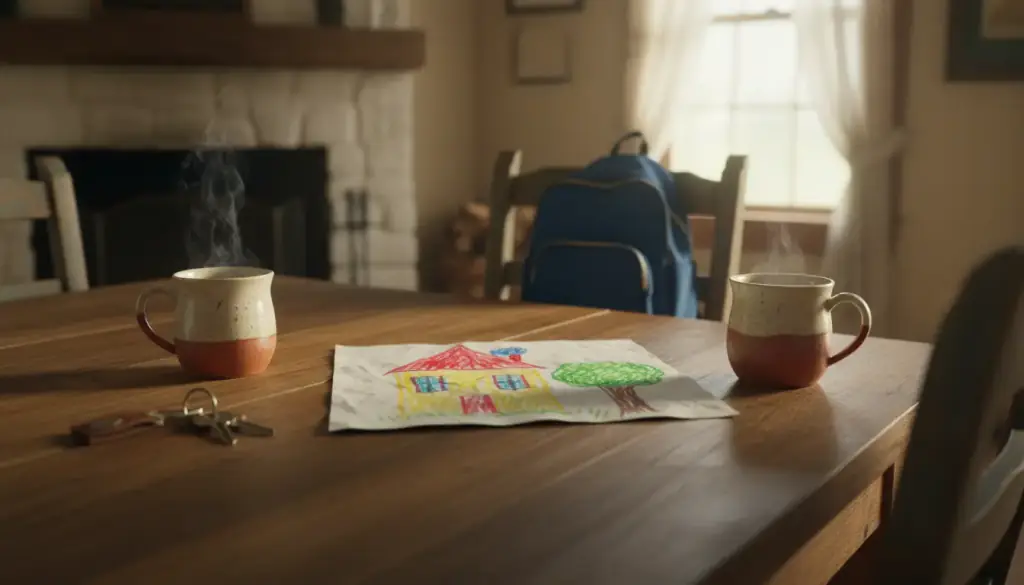
Kitchen table with two mugs, house keys and a child's crayon drawing of a house
Admitted 1981: Missouri, the Western District and the Eighth Circuit
Gary Stamper has practiced divorce and family law for over 40 years, including custody, support and paternity. He was admitted to the Missouri Bar in 1981 and to the U.S. District Court for the Western District of Missouri and the U.S. Court of Appeals for the Eighth Circuit. His degree is from the University of Missouri-Columbia School of Law, where he took part in the Board of Advocates and the Order of the Barristers.
He takes cases into the courts of Boone, Cooper, Howard and Cole Counties, and the matters he handles are divorce and divorce consulting, separation, custody, support, paternity and mediation. Mediation is part of the work, not a footnote to it: some disputes are settled across a table, and some are not.
He is a recipient of the Roger P. Krumm Award, given for outstanding family lawyer of the year, and he is listed in Best Lawyers in America, with entries running from 2014 through 2019.
Chapter 03
Modification, relocation and the years after the decree
A decree is not always the end of the matter. Incomes change, children grow, a parent takes a job in another city, and an order written for one set of facts can stop fitting. Modification and relocation are the two places where families most often come back to the court.
Gary has written on both, in "Relocation in the New Millennium" and "Dissolution Issues with 60+ Years - The Baby Boomer Divorce." His other titles include "Support for Disabled Children" and "Domestic Partnership Agreements."
None of this is advice for your case. Every family's facts are its own, and the right first step is to talk to Gary about your situation.
Gary Stamper: admitted to the Missouri Bar in 1981, the U.S. District Court for the Western District of Missouri and the U.S. Court of Appeals for the Eighth Circuit; recipient of the Roger P. Krumm Award for outstanding family lawyer of the year.
Publications by Gary Stamper
Matters handled: Divorce & Divorce Consulting · Separation · Custody · Support · Paternity · Mediation
Titles he has published for family law audiences: “Private School Tuition and Form 14” · “Relocation in the New Millennium” · “Support for Disabled Children” · “Domestic Partnership Agreements” · “Dissolution Issues with 60+ Years - The Baby Boomer Divorce”
Talk to Gary about your situation
To set up a meeting, request a consultation or call the office on (573) 442-2454. Hours are Monday to Friday, 8:00 am to 12:00 pm and 1:00 pm to 4:00 pm, and after-hour appointments are arranged. Estate matters in the same family are handled by Skip Walther.
The information on this page does not constitute legal advice. Using this website or contacting the firm through it does not create an attorney-client relationship, and one is not established until the firm agrees to represent you. Please do not send details of your case by email.